
Storage networking is different
The storage industry has a very specific view of the networking protocols – they expect the network to be extremely reliable, either by making it lossless or by using a transport protocol (TCP + embedded iSCSI checksums) that was only recently made decently fast.
Some of their behavior can be easily attributed to network-blindness and attempts to support legacy protocols that were designed for a completely different environment 25 years ago, but we also have to admit that the server-to-storage sessions are way more critical than the user-to-server application sessions.
FCoE and DCB standards
The debate whether the DCB standards are complete or not and thus whether FCoE is a standard-based technology are entering the metaphysical space (just a few more blog posts and they will join the eternal angels-on-a-hairpin problem), but somehow the vendors are not yet talking about the real issues: when will we see the standards implemented in shipping products and will there be a need to upgrade the hardware.
Read more ... (yet again @ etherealmind.com)
Tweak the Search Engine rankings to push IPv6
We all know that IPv6 deployment is a chicken-and-egg problem: Service Providers are slow to adopt IPv6 because they can’t charge for it and the content providers don’t care because there are no IPv6 customers.
My good friend Jan Žorž got a great idea during the Google IPv6 Implementers Conference and finally managed to write it down: all we need is a slight search engine preference for sites reachable over IPv4 and IPv6. A small well-publicized tweak in Google’s scoring algorithm would push the content providers toward IPv6 and force web hosting companies to roll out IPv6 support immediately.
Interesting links (2010-08-21)
Two interesting QoS-focused posts from last week: Brad Hedlund was explaining the difference between UCS and HP Virtual Connect QoS (short summary: one does queuing, the other one rate-limiting) and Russell Heilling nicely described the QoS problems encountered in a Service Provider network (he’s coming to the same conclusion as I did: we need per-user queuing, but describes it way more eloquently).
After I’d stumbled upon Russell’s blog, I started reading his older posts and found a nice in-depth explanation of one potential road to Net Neutrality hell paved with good intentions.
More IPv6 FUD being thrown @ CFOs
The CFO magazine has recently published a FUDful article “Trouble Looms for Company Websites” (read it to see what CFOs have to deal with). Obviously, some people think it’s a good idea to throw FUD at CFOs to get the budget to implement IPv6. Long term, it’s a losing strategy; your CFO will become immune to anything coming from the IT department and ignore the real warnings.
Yes, it's time to make your content reachable over IPv4 and IPv6, more so if you’re in the eyeballs business. Google knows that. So does Facebook. Twitter doesn’t seem to care. Maybe because they’re not selling ads?
I Don’t Need no Stinking Firewall ... or Do I?
Brian Johnson started a lively “I don’t need no stinking firewall” discussion on NANOG mailing list in January 2010. I wanted to write about the topic then, but somehow the post slipped through the cracks… and I’m glad it did, as I’ve learned a few things in the meantime, including the (now obvious) fact that no two data centers are equal (the original debate had to do with protecting servers in large-scale data center).
First let’s rephrase the provocative headline from the discussion. The real question is: do I need a stateful firewall or is a stateless one enough?
Port or Fabric Extenders?
Among other topics discussed during the Big Hot and Heavy Switches (Part 1) podcast (if you haven’t listened to it yet, it’s high time you do), we’ve mentioned port extenders. As our virtual whiteboard is not always clearly visible during the podcast (although we scribble heavily on it), here’s the big-picture architecture:
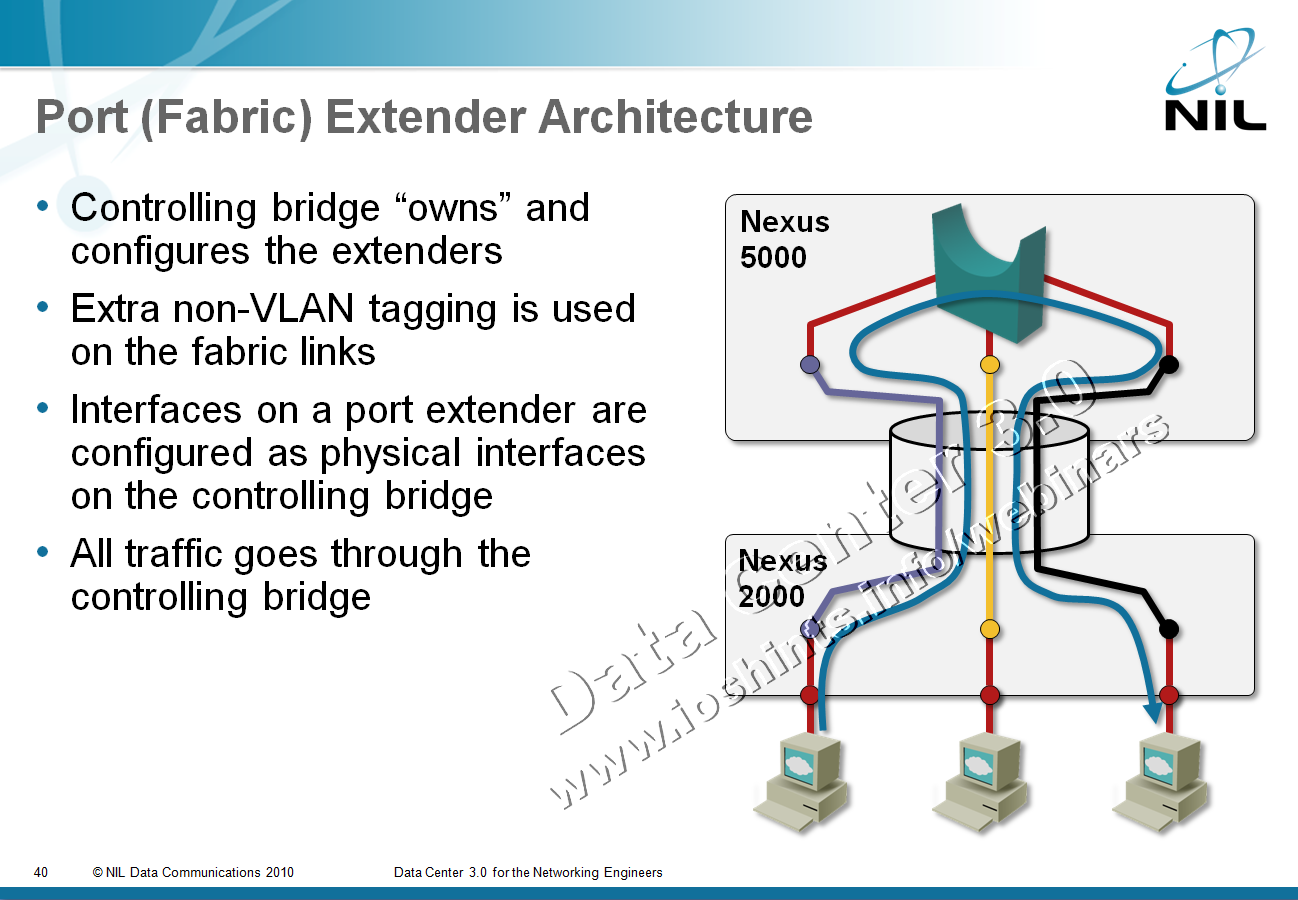
After the podcast I wanted to dig into a few minor technical details and stumbled into a veritable confusopoly.
Packet Filters on a Nexus 7000
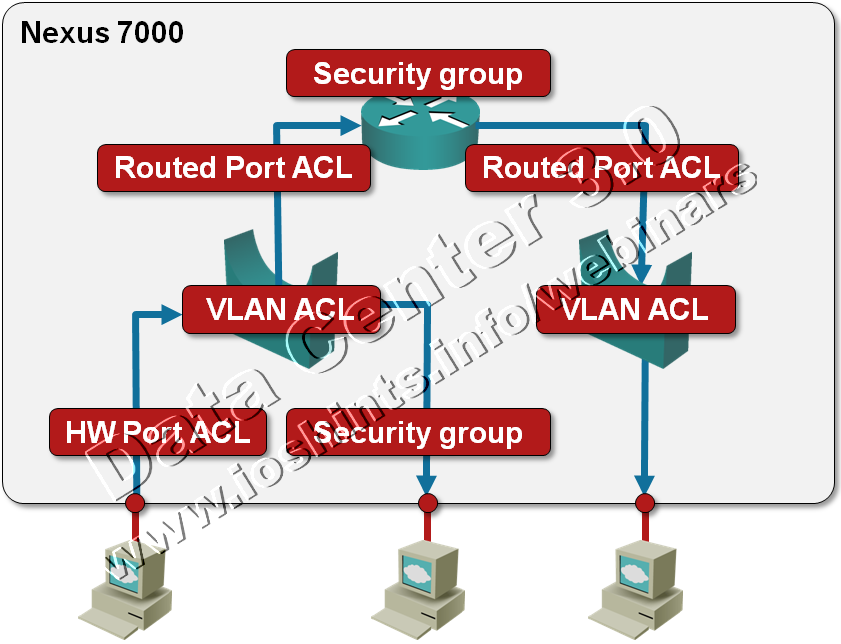
We’re always quick to criticize ... and usually quiet when we should praise. I’d like to fix one of my omissions: a few days ago I was trying to figure out whether Nexus 7000 supports IPv6 access lists (one of the presentations I was looking at while researching the details for my upcoming Data Center webinar implied there might be a problem) and was pleasantly surprised by the breadth of packet filters offered on this platform. Let’s start with a diagram.
WAF musings ... not again?
Following my obituary for Cisco’s WAF, Packet Pushers did a really great WAF-focused podcast with Raven Alder, appropriately named Saving the Web with Dinky Putt Putt Firewalls. If you have more than a fleeting interest in protecting business web applications, you should definitely listen to it. Just as an aside: when they were recording the podcast, I was writing my To WAF or not to WAF post ... and it’s nice to see we’re closely aligned on most points.
There’s just a bit I’d like to add to their ponderings. What Raven describes is the “proper” (arduous, time-consuming and labor-intensive) use of WAF that we’re used to from the layer-3/4 firewalls: learning what your web application does (learning because the design specs were never updated to reflect reality) and then applying the knowledge to filter everything else (what I sometimes call the fascist mode – whatever is not explicitly permitted is dropped).
Interesting links (2010-08-14)
A few days ago I wrote that you should always strive to understand the technologies beyond the reach of your current job. Stephen Foskett is an amazing example to follow: although he’s a storage guru, he knows way more about HTTP than most web developers and details of the web server architecture that most server administrators are not aware of. Read his High-Performance, Low-Memory Apache/PHP Virtual Private Server; you’ll definitely enjoy the details.