
Upcoming Presentations and Conferences
March will be a pretty busy month: I’ll be @ Troopers 14 and Interop Las Vegas. If you plan to be at one of these conferences, drop by one of my presentations:
- SDN, OpenFlow and NFV – hype and reality (1 day workshop);
- High Availability Strategies in IPv6 networks;
- SDN and Security – a Perfect Fit or Oil and Water;
- Designing the Virtual Networks for Software-Defined Data Centers (half-day workshop);
- Infrastructure for Private Clouds (half-day workshop);
- Following a Packet through the Virtual Data Center.
The list of past and upcoming presentations is also available on my web site.
Keep Your Failure Domains Small
A week after the disastrous sleet that kicked whole regions of Slovenia off power grid the servicemen of the local power distribution company (working literally days and nights) managed to restore electricity to the closest town … but it still might take days or even weeks before everyone gets it. One of the reasons: huge failure domains.
First-hop Load Balancing in IPv6
“I want default router address in DHCPv6 options” is a popular religious war on various IPv6 mailing lists. One of the underlying reasons is the need to implement poor man’s first hop load balancing (I won’t even consider the “I don’t want to think, so want IPv6 to behave like IPv4” mentality in this blog post), and as always, the arguments have more to do with suboptimal implementations than true technical needs.
Distributed In-Kernel Firewalls in VMware NSX
Traditional firewalls are well-known chokepoints in any virtualized environment. The firewalling functionality can be distributed across VM NICs, but some of those implementations still rely on VM-based packet processing resulting in a local (instead of a global) performance bottleneck.
VMware NSX solves that challenge with two mechanisms: OpenFlow-based stateful(ish) ACLs in VMware NSX for multiple hypervisors and distributed in-kernel stateful firewall in VMware NSX for vSphere. You’ll find more details in the NSX Firewalls video recorded during the VMware NSX Architecture webinar.
Disasters and Recoveries, Part 2
You wouldn’t believe what your second most pressing problem is when you lose electricity for a few days in the middle of a winter storm: freezer. Being a good engineer focused on redundant solutions, I bought a diesel generator before moving into the hills to keep the freezer at a reasonably low temperature in case of a long-term power loss.
I also thought about using the same generator to run our central heating. As always, I found a huge disconnect between theory and practice.
Why Can't We Have Plug-and-Play Networking?
Every time I plug a new device into my Windows laptop and it automatically discovers the device type, installs the driver, configures the devices, and tells me it’s ready for use, I wonder why we can’t have get the same level of automation in networking.
Consider, for example, a well-known vSphere link failover issue: if you forget to enable portfast on server-facing switch ports, some VMs lose connectivity for up to 30 seconds every time a switch reloads.
Disasters and Recoveries, Part 1
You probably know the three steps to a disaster recovery plan: Disaster. Recovery. Plan. It’s amazing how true that joke is, and how unprepared we tend to be for infrequent outages.
Things you say actually mean stuff
This is totally out of context, but imagine the consultants and marketers promising us unicorn-generated nirvana like follow-the-sun VM mobility or large-scale flow-based forwarding encountering Alice.

Complex Routing in Hyper-V Network Virtualization
The layer-3-only Hyper-V Network Virtualization forwarding model implemented in Windows Server 2012 R2 thoroughly confuses engineers used to deal with traditional layer-2 subnets connected via layer-3 switches.
As always, it helps to take a few steps back, focus on the principles, and the “unexpected” behavior becomes crystal clear.
2014-02-05: HNV routing details updated based on feedback from Praveen Balasubramanian. Thank you!
VMware Virtual Network: Stuck Between the Past and the Future
If you want to implement overlay virtual networking with VMware products today, you have two options: use vCNS 5.5 or NSX for vSphere… and I would be hard pressed to choose one or the other.
Post #2000
When I started blogging in 2006, I had no idea that I’d still be doing it 8 years later… and I never dreamed of writing my 2000th post (this one, according to my blogging platform).
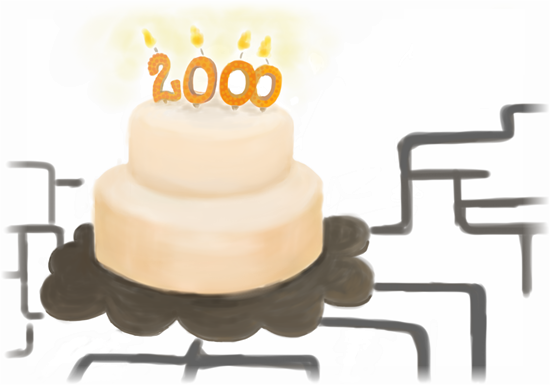
A virtual cake I got from my lovely daughter ;)
IPv6 reachability between ULA and GUA endpoints
From the IPv6 Trivia department: can a host with an ULA address reach a service with a global IPv6 address? Can a host with only a link-local address reach a service with a global IPv6 address? The answer to both questions might be Yes (but you better know what scopes and zones are if you want to figure it out).
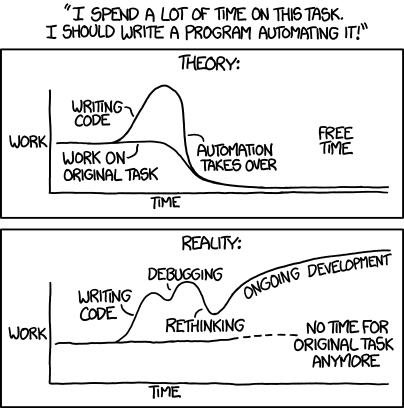
Automation Explained
Just in case you've missed it: the ultimate explanation of DevOps, NetOps and other automation ideas.
Network Monitoring with OpenFlow
You know how hard it is to get the network traffic statistics: interface counters are too coarse, Netflow records are too granular, Sflow is sampling… life is hard for network monitoring Goldilocks.
In the Network Monitoring video (part of Real-Life OpenFlow Use Cases webinar) I explained an interesting alternative: you could get (hardware permitting) traffic counters with ever OpenFlow flow entry, resulting in any granularity you need.
PA, PI or ULA IPv6 Address Space? It depends
Having “do we need ULA” blogologs with Ed Horley is great … and the best part of them is that we’re both right (aka: It Depends). OK, let’s try to quantify that last part.